

A Deep, Practical Salary Guide for Plumbers, Apprentices, and Plumbing Business Owners
Plumbing remains one of the most reliable and stable career paths in the skilled trades. With rising demand for trained technicians, growing infrastructure needs, and fewer young people entering the trades, plumber salaries continue to climb year after year. But how much do plumbers actually make today, and what determines those earnings?
Plumbers earn a median salary of $62,970 per year, or about $30 per hour, according to the U.S. Bureau of Labor Statistics. The lowest 10 percent earn under $40,670 and the top 10 percent earn more than $105,150, with pay rising sharply through apprenticeship, licensing, and specialization.
This comprehensive guide breaks down plumber salaries across experience levels, regions, business models, and job types. We also explore how technicians can increase their income and how plumbing business owners can structure compensation to attract top talent while staying profitable.
Whether you’re a technician, an apprentice, or a plumbing business owner, this guide will give you the full picture.
National Salary Snapshot: What Most Plumbers Earn Today?
Across the United States, plumbers typically earn between $50,000 and $90,000+ per year, with many falling around the mid-$60,000 range. These numbers depend heavily on factors like experience, location, job type, overtime, and specializations.
Here’s a general breakdown:
- Entry-level apprentices: $37,000–$45,000
- Journeyman plumbers: $55,000–$75,000
- Master plumbers: $80,000–$105,000+ (the top 10% of plumbers earn over $105,150 per BLS)
- Owners and high-specialty plumbers: can exceed these ranges depending on business size and market
These are averages. In busy metro regions or high-demand areas, plumbers may earn more. In lower-cost regions, salaries may be lower but buying power may actually be higher.
Salary by Experience Level: What Each Stage Really “Pays”?

Experience level is one of the most significant predictors of income in the plumbing trade. Below is an expanded look at each career stage.
Apprentice Plumbers
Apprentices are in training and typically earn an hourly wage. They often start in the low range but increase steadily through each year of the apprenticeship.
Typical apprentice earnings:
- Hourly: Often around the high teens to low 20s
- Annual: $32,000–$50,000 depending on region and hours worked
- Overtime: Many apprentices increase earnings significantly through after-hours or weekend work
Why apprentices earn what they earn:
- Their primary role is learning the trade
- They work under supervision
- Their productivity increases with every year
- Licensing requirements limit the type of work they can perform alone
Apprentices with strong mechanical skills, reliability, and willingness to take overtime often rise quickly.
Journeyman Plumbers
Once a plumber becomes licensed or fully qualified, income increases sharply. Journeymen can work independently, handle more complex jobs, and complete work faster.
Typical journeyman earnings:
- Hourly: Often mid-20s to mid-30s
- Annual: About $55,000–$80,000 depending on area and job mix
- Potential bonuses: sales bonuses, customer-service incentives, on-call pay
Journeymen with strong diagnostic skills, customer communication skills, and exceptional work efficiency often outperform the average by a wide margin.
Master Plumbers & Senior Techs
Master plumbers reach the top of the licensing ladder. They can supervise crews, pull permits, manage large projects, and train less-experienced techs.
Typical master plumber earnings:
- Annual: $80,000–$100,000+
- Some master plumbers exceed $120,000, depending on specialization or leadership roles.
- Those who transition into supervisory, estimating, or management often earn even more
At this level, experience, leadership, problem-solving, and professional reputation dramatically impact earning potential.
State-by-State – Plumbers’ Salaries Differ
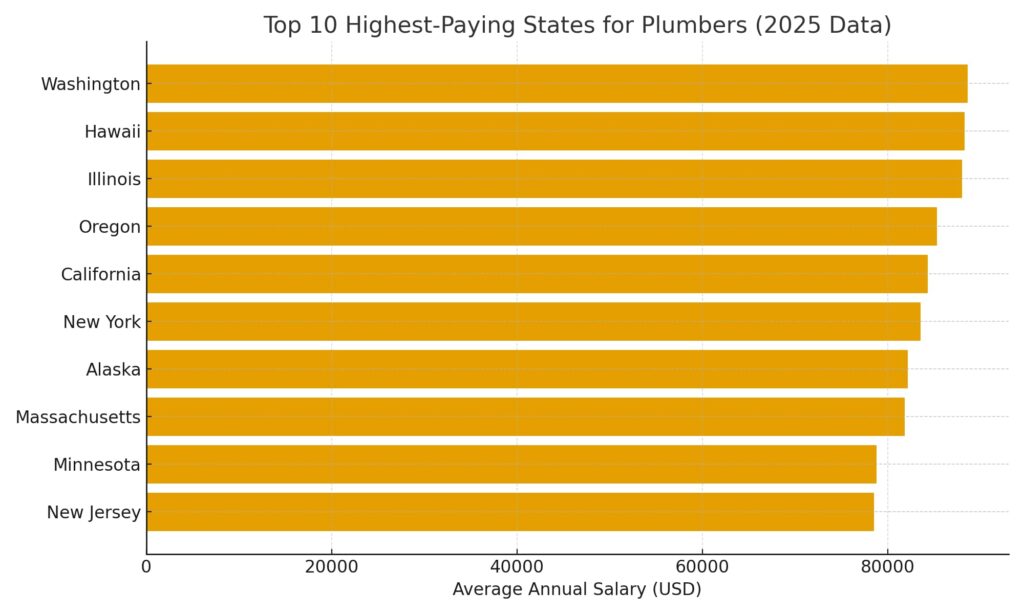
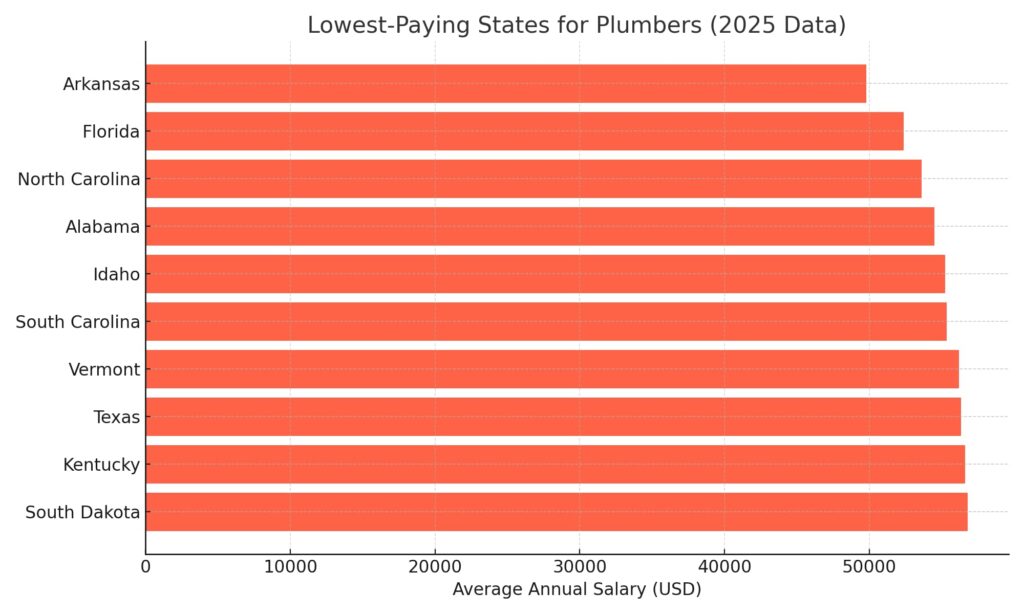
| Highest Paying States | Lowest Paying States |
|---|---|
| Washington | Arkansas |
| Hawaii | Florida |
| Illinois | North Carolina |
| Oregon | Alabama |
| California | Idaho |
| New York | South Carolina |
| Alaska | Vermont |
| Massachusetts | Texas |
| Minnesota | Kentucky |
| New Jersey | South Dakota |
Cost of Living
High-cost areas (Northeast, West Coast, major metros) often offer higher salaries simply because living expenses are higher. However, increased salary does not always equal higher quality of life.
Union Presence
Some states have stronger union representation, which often raises wages for plumbing professionals through negotiated scales.
Local Demand
Areas with:
- Older housing stock
- Rapid new construction
- Commercial or industrial growth
…typically pay more because qualified labor is in shorter supply.
Regulatory Requirements
States with more complex licensing requirements often pay higher wages because the barrier to entry is higher.
Rural vs. Urban
Urban plumbers tend to earn more on paper due to higher call volume and more commercial systems, but rural plumbers sometimes keep more of their earnings because their cost of living is much lower.
How Plumbers Actually Earn More Than Their Base Salary
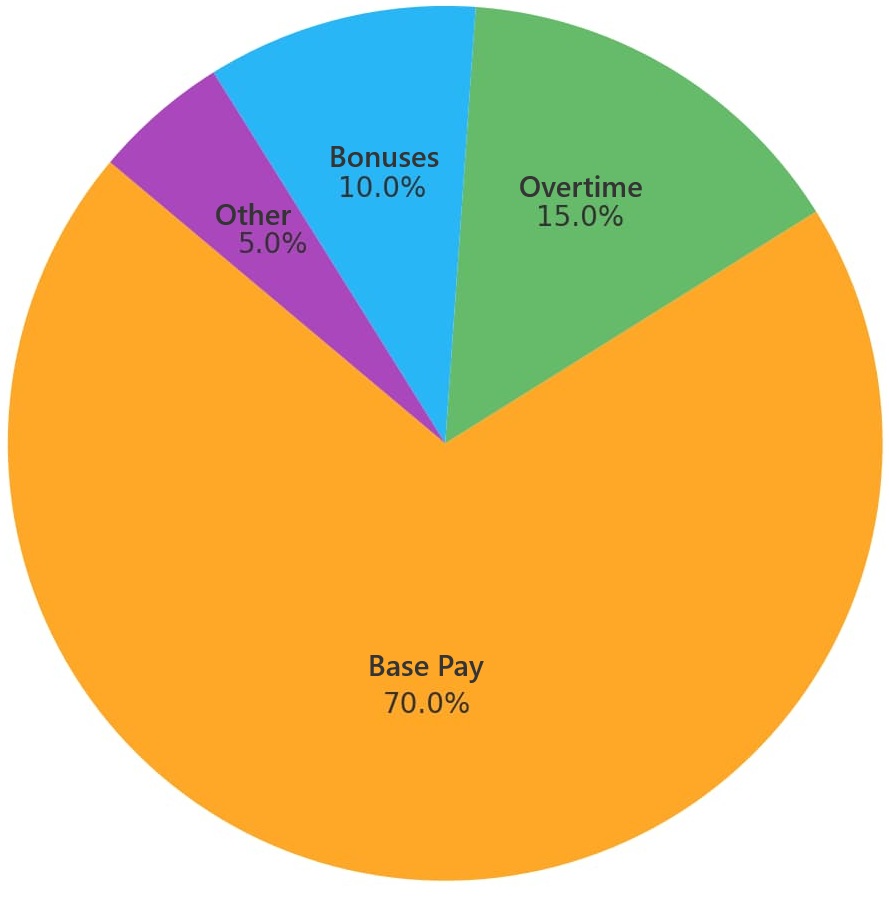
A plumber’s “base salary” is often very different from their real annual income. Most plumbers have several earning channels:
Overtime
Plumbing emergencies happen at all hours.
High-performing plumbers often increase their annual earnings by:
- Answering night or weekend calls
- Taking on-call rotations
- Handling urgent repairs
Overtime rates generally pay time-and-a-half or more, which adds thousands of dollars per year.
Emergency & After-Hours Work
Many companies pay:
- Weekly or monthly on-call stipends
- Higher job rates for after-hours calls
- Weekend and holiday premiums
For many plumbers, this alone adds 10–25% to their yearly income.
Commissions & Performance Bonuses
Plumbers in residential service commonly earn extra income through:
- Selling water heaters, filtration systems, or sewer-line replacements
- Recommending maintenance agreements
- Providing system upgrades
- Achieving high customer satisfaction scores
- Reducing callbacks
High-performing plumbers often earn thousands in additional bonuses each year
Bonuses & Performance Pay
Compensation packages often include:
- Health insurance
- Retirement plans
- Paid vacation and holidays
- Tool allowances
- Company vehicle use
- Uniforms and training reimbursements
A competitive benefits package can increase the real value of a plumber’s pay by 10–30%.
Benefits
While not technically salary, benefits add real value:
- Health insurance
- Retirement contributions
- Paid time off
- Tool allowance
- Vehicle or fuel allowance
These can significantly increase total compensation.
What Separates High Earners From Others
1. Skill Level & Specialization
Specialized plumbers earn significantly more, especially those trained in:
- Hydronic heating systems
- Medical gas lines
- Backflow prevention
- Commercial boilers
- Industrial piping
- High-rise systems
- Water filtration and treatment
Complex jobs require deeper training—so the pay is higher.
2. Productivity & Job Efficiency
Plumbers who complete more jobs per day typically:
- Earn more commission
- Get more bonuses
- Receive raises faster
- Become team leads or trainers
Smart scheduling and routing (which Optsy helps streamline) dramatically affects productivity—meaning technicians spend more time on jobs and less time driving.
3. Customer Communication Skills
Soft skills matter just as much as technical skills.
High-earning plumbers excel at:
- Explaining options clearly
- Building trust
- Recommending long-term solutions
- Preventing callbacks
- Receiving positive customer reviews
Better communication = more revenue = higher compensation.
4. Career Path Choices
Plumbers who want to advance can choose paths like:
- Lead technician
- Field supervisor
- Operations manager
- Estimator
- Project manager
- Business owner
Each step up the ladder increases earning potential significantly.
5. They understand the business side
Techs who know how their work affects revenue, profit, and customer retention tend to advance faster.
This is where software like Optsy gives owners and techs visibility into job costs, productivity, and performance metrics, helping high performers get recognized and rewarded.
How Plumbing Business Owners Can Pay Fairly and Stay Profitable
If you’re a plumber looking to grow your earnings, here’s a proven roadmap.
Step 1: Advance your Licensing
Move from apprentice → journeyman → master as quickly and confidently as possible. Each step increases both freedom and earning power.
Step 2: Invest in High-Value Skills
Focus on skills that few others have. Specialization creates scarcity—which raises your value.
Step 3: Learn to Use Technology
Modern service companies rely on digital tools for:
- Scheduling
- Dispatching
- Invoicing
- Customer records
- Equipment history
- Maintenance agreements
Plumbers who understand these systems are more efficient and more valuable.
Step 4: Build Strong Customer Communication Habits
Customers hire people, not pipes.
When you communicate clearly and confidently, customers trust you—and trust leads to better reviews, more work, and more bonuses.
Step 5: Track Your Own Performance Metrics
Top plumbers know their numbers:
- Jobs completed per day
- Average ticket
- Callback rate
- Customer satisfaction
- Add-on service recommendations
With Optsy, technicians gain visibility into their workload, job history, and performance—making it easier to improve and demonstrate value.
For Business Owners: Paying Employees Well While Staying Profitable
Owners want to pay fair wages—but need to stay profitable. The key is structured compensation, not guesswork.
Use Performance-Based Pay Plans
Instead of flat wages, consider:
- A strong hourly base
- Performance bonuses
- Commission opportunities
- On-call pay
- Team incentives
This ensures high-performing plumbers are rewarded, and owners get the ROI they need.
Optimize Scheduling & Routing
Inefficient scheduling drains profit.
Optimized scheduling:
- Reduces drive time
- Increases jobs per day
- Cuts overtime
- Boosts customer satisfaction
Optsy’s scheduling tools help companies run tighter, more profitable operations, making higher pay sustainable.
Make Growth Transparent
Create a clear career ladder:
Apprentice → Junior Tech → Journeyman → Senior Tech → Lead → Supervisor → Manager
Show what each step requires:
- Certifications
- Skills
- Productivity levels
- Customer-service metrics
When plumbers see a path to advancement, turnover decreases—and performance increases.
The Future of Plumbing Salaries
The Bureau of Labor Statistics projects 4% growth for plumbers, pipefitters, and steamfitters from 2024 to 2034, with about 44,000 job openings per year.
The market outlook strongly favors plumbers:
- Demand continues to rise
- Older tradespeople are retiring
- Fewer young workers are entering the trades
- Plumbing systems are getting more complex, increasing the need for skilled technicians
- Technology is helping companies increase efficiency and profitability
This combination means salaries are expected to continue rising for years to come.
Final Takeaway
Plumbing is one of the most financially rewarding trade careers—and one of the most stable. Earnings vary, but with experience, specialization, strong communication, and the right company structure, plumbers can build long, high-income careers.
For plumbing businesses, profitability hinges on smart scheduling, accurate job tracking, and performance insight, all of which Optsy provides. The better the operation runs, the easier it is to offer competitive pay and retain top talent.