

Commercial HVAC refers to heating, ventilation, and air conditioning systems designed for large-scale buildings rather than homes. These systems regulate temperature, airflow, humidity, and indoor air quality in offices, retail centers, warehouses, schools, hospitals, and industrial facilities.
Unlike residential systems that typically serve one household, commercial HVAC systems must handle higher occupancy, multiple zones, heavier usage, and complex compliance requirements. They often operate longer hours, sometimes 24/7, which means maintenance and reliability are critical.
For contractors, commercial HVAC represents a more technical and often more profitable segment of the industry, but it also requires stronger operational systems to manage effectively.
Commercial vs Residential HVAC: What’s the Difference?
Commercial HVAC is fundamentally different from residential HVAC in scale, design, and service complexity.
| Feature | Residential HVAC | Commercial HVAC |
|---|---|---|
| Building Size | Designed for single-family homes, apartments, or small living spaces. | Built for office buildings, warehouses, hospitals, retail centers, schools, and multi-floor facilities. |
| System Capacity | Smaller units designed to handle limited square footage. | Large-capacity systems engineered for high occupancy and continuous operation. |
| Equipment Types | Split systems, heat pumps, small package units. | Rooftop Units (RTUs), chillers, cooling towers, VRF systems, commercial boilers, air handling units (AHUs). |
| Zoning | Typically 1–2 temperature zones per home. | Multiple independent zones across floors or tenant spaces. |
| Controls & Automation | Standard thermostats with limited automation. | Advanced building automation systems (BAS) with remote monitoring and programmable controls. |
| Service Frequency | Seasonal maintenance (usually 1–2 visits per year). | Scheduled preventative maintenance contracts (monthly, quarterly, or customized). |
| Regulatory Requirements | Basic local residential codes. | Strict commercial building codes, compliance documentation, and inspection standards. |
| Installation Complexity | Straightforward installation with limited coordination. | Requires engineering plans, multi-team coordination, permits, and compliance review. |
| Downtime Impact | Inconvenience for homeowners. | Can disrupt business operations, employees, customers, or sensitive environments like hospitals. |
| Service Documentation | Minimal record-keeping required. | Detailed service logs, inspection records, and compliance documentation often mandatory. |
Residential work is simpler and faster. Commercial work requires documentation, coordination, and structured scheduling.
Common Types of Commercial HVAC Systems
Commercial HVAC technicians regularly work on a range of large and specialized systems.
Rooftop Units (RTUs)
Packaged systems installed on building rooftops that provide heating and cooling.
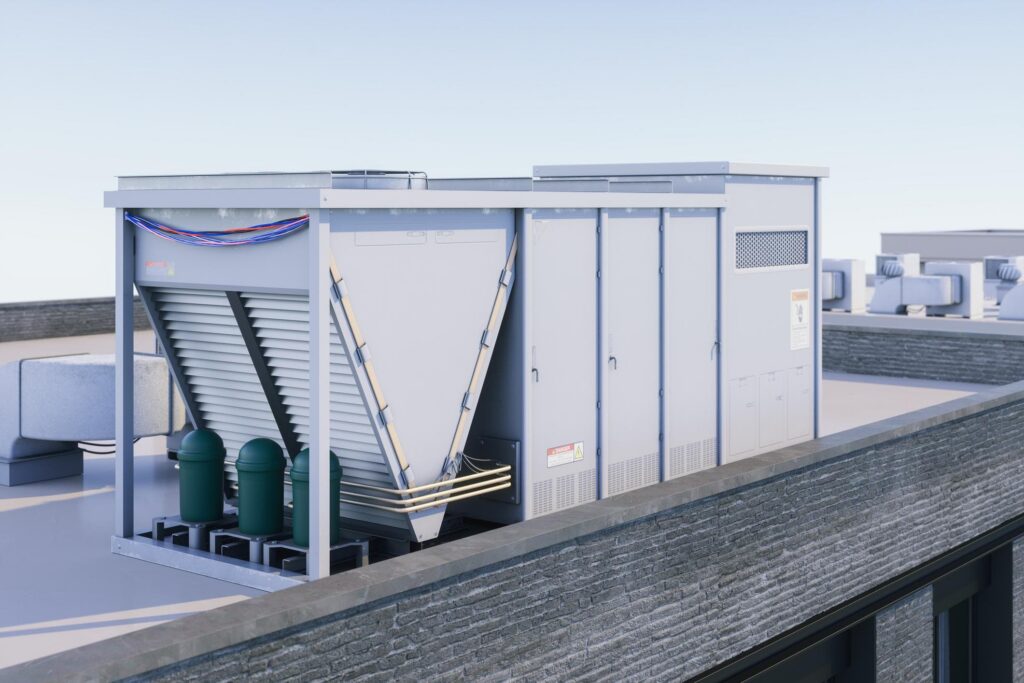
RTUs are common in retail stores, schools, and office buildings because they are centralized and efficient.
Chillers & Cooling Towers
Used in larger facilities, chillers cool water which circulates through air handling systems.
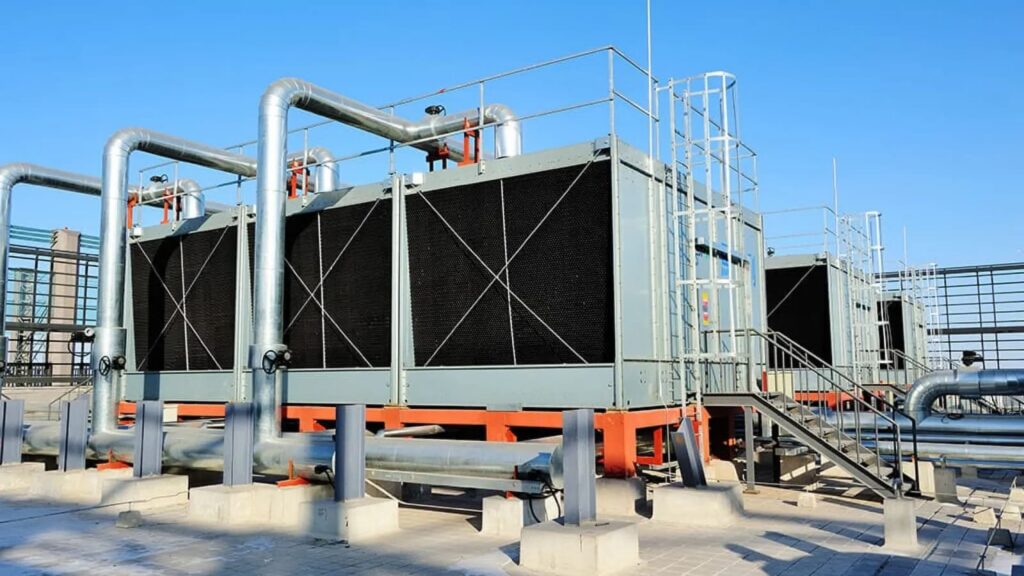
These systems are complex and require skilled technicians and ongoing preventative maintenance.
Variable Refrigerant Flow (VRF) Systems
VRF systems allow multiple indoor units to operate independently, improving efficiency and comfort control.
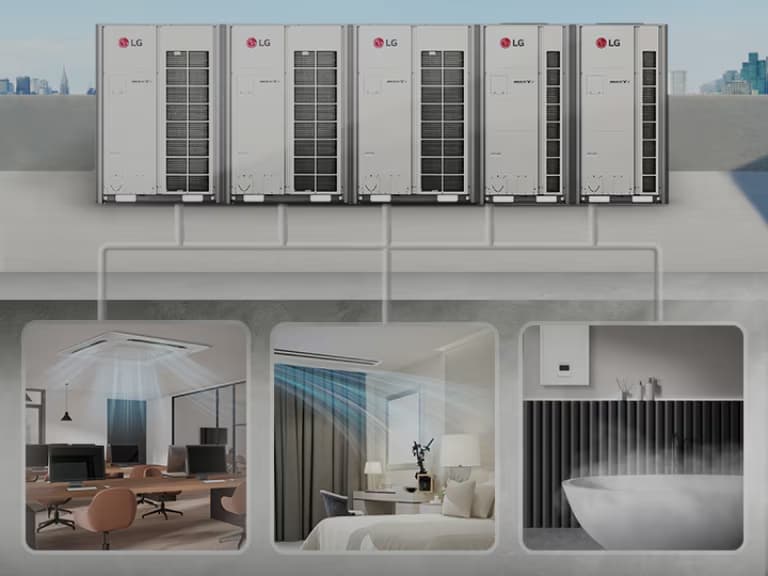
VRF systems are popular in hotels, mixed-use buildings, and offices with diverse temperature needs.
Why Commercial HVAC Is More Profitable (And What Most Contractors Miss)
One of the biggest reasons contractors transition from residential into commercial HVAC is simple: the revenue potential is significantly higher.
Commercial HVAC work isn’t just about larger equipment, it’s about larger contracts, recurring service agreements, and long-term client relationships.
Unlike residential jobs, which are often one-time service calls or seasonal installs, commercial HVAC typically operates under structured preventative maintenance contracts. These agreements provide predictable income month after month, creating stability that residential service rarely offers.
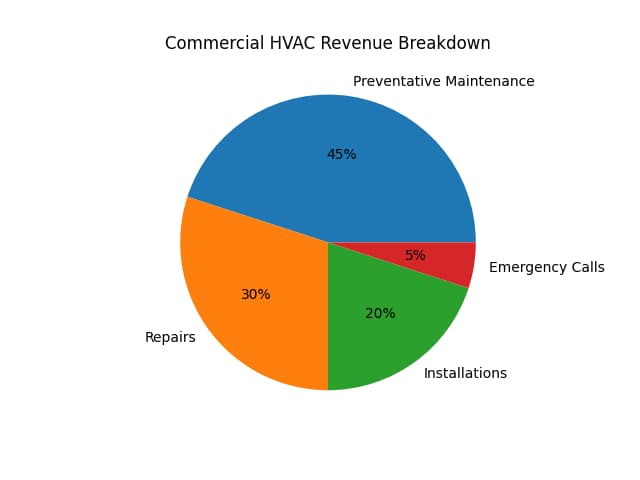
In fact, most successful commercial HVAC companies generate revenue from four primary sources:
- Preventative maintenance contracts
- Ongoing repairs
- System replacements and installations
- Emergency service calls
For many commercial contractors, preventative maintenance alone accounts for nearly half of total annual revenue. That steady base income makes it easier to plan staffing, manage cash flow, and forecast growth.
But here’s the part many contractors overlook:
Commercial HVAC is only more profitable if it’s managed correctly.
Without strong operational systems in place, larger jobs can actually reduce margins due to scheduling inefficiencies, labor misallocation, or poor documentation.
The Real Complexity Behind Commercial HVAC Operations
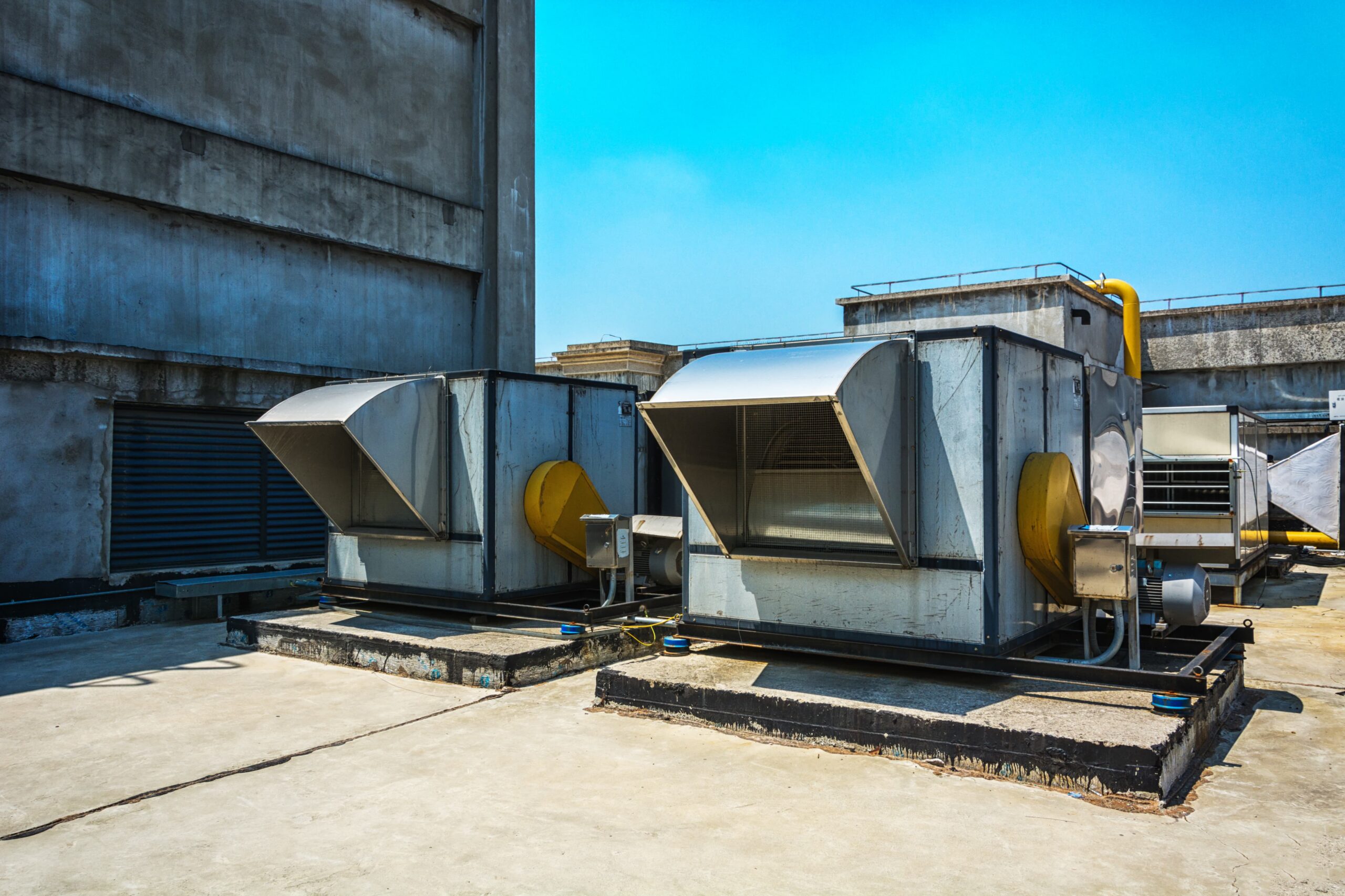
Commercial HVAC isn’t just bigger residential work. It’s operationally more complex in almost every way.
On a single commercial property, you might be responsible for:
- 8–12 rooftop units
- Multiple air handling systems
- Separate tenant zones
- A chiller plant
- Compliance inspection records
- Preventative maintenance tracking
- Emergency response agreements
Now multiply that across multiple buildings, sometimes under the same client.
Unlike residential service, where a technician completes one job and moves on, commercial HVAC requires coordination between teams, recurring scheduling, equipment tracking, and performance documentation.
This is where many growing contractors hit operational bottlenecks.
Without structured systems in place, companies struggle with:
- Missed preventative maintenance visits
- Incomplete service documentation
- Poor technician coordination
- Unclear job costing
- Slow response to urgent calls
Commercial HVAC success depends less on installing equipment and more on managing systems efficiently.
The 5 Biggest Operational Challenges in Commercial HVAC

As companies scale, operational friction becomes the biggest threat to profitability.
Commercial HVAC contractors commonly face:
1. Equipment Tracking Challenges
Each building may contain dozens of individual pieces of equipment. Keeping accurate service histories for each unit becomes difficult without centralized tracking.
2. Scheduling Coordination
Commercial jobs often require multiple technicians, lift equipment, and phased work schedules. Manual scheduling leads to wasted labor hours.
3. Recurring Contract Management
Preventative maintenance agreements must be tracked precisely. Missed visits damage credibility and revenue.
4. Profitability Visibility
Without accurate job costing and reporting, contractors may not know which contracts are profitable and which are underpriced.
5. Emergency Dispatch Pressure
When a commercial system fails, response time matters. Businesses can lose thousands of dollars per hour in downtime.
As complexity increases, spreadsheets and paper logs simply cannot scale.
How Optsy Supports Commercial HVAC Contractors
This is where operational structure makes the difference.
Optsy is designed to help commercial HVAC companies manage complexity without increasing administrative burden. As optsy being a modern field service management platform, it centralizes scheduling, dispatching, reporting, and contract tracking into one streamlined system.
Instead of juggling spreadsheets and disconnected tools, contractors can run their entire operation from a single dashboard with a hvac software. This improves efficiency, reduces errors, and gives business owners complete visibility into field performance.
Smart Scheduling & Dispatch
Assign multiple technicians across job sites with optimized routing and reduced downtime. Built-in dispatch tools help coordinate teams across large buildings, multi-tenant properties, and recurring service agreements without confusion.
Equipment-Level Service Tracking
Maintain detailed service histories for every rooftop unit, chiller, boiler, or air handling system — all accessible from the field. This centralized tracking improves accountability and allows contractors to make smarter service decisions based on real performance data.
Preventative Maintenance Automation
Automatically schedule recurring service visits and manage maintenance contracts without manual reminders. Structured automation ensures no agreement is missed, protecting recurring revenue while improving client retention.
Real-Time Technician Updates
Monitor job progress, technician location, and work status in real time. Increased visibility improves response times, strengthens communication, and keeps projects moving efficiently.
Job Costing & Performance Reporting
Track contract profitability, labor costs, and technician productivity with built-in reporting tools. Clear financial insights help business owners identify high-performing contracts and eliminate inefficiencies that reduce margins.
Commercial HVAC business growth are complex, involving multiple technicians, large equipment systems, and recurring agreements. Optsy simplifies that complexity by bringing scheduling, service management, and financial tracking into one powerful solution.
The Future of Commercial HVAC: Technology-Driven Growth
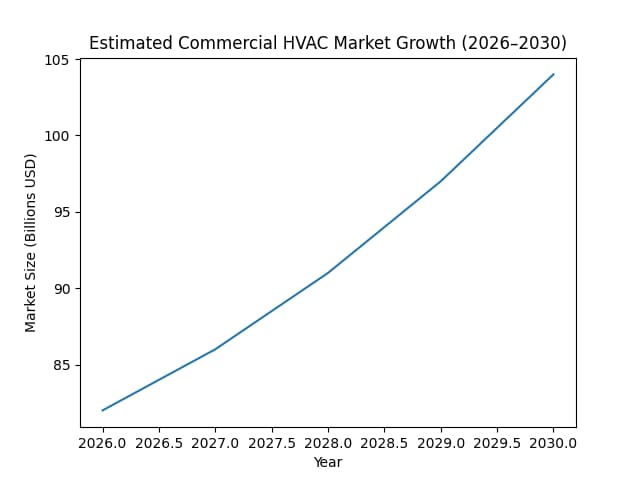
The commercial HVAC industry is evolving quickly. Several trends are reshaping how contractors operate:
- Energy-efficient system upgrades
- Smart building automation systems
- Remote monitoring and diagnostics
- Data-driven preventative maintenance
- Compliance-focused service documentation
As commercial systems become more advanced, service expectations increase. Clients want transparency, faster service, and measurable performance.
Contractors who adopt structured field service management tools will be positioned to grow faster, scale safely, and improve margins.
Those who rely on manual processes will struggle to keep up.
Growing a Commercial HVAC Business in a Competitive Market
Commercial HVAC contractors today are not just competing on technical skill, they are competing on visibility and service experience. Strong HVAC marketing strategies, including local SEO, service agreement promotions, and digital reputation management, play a critical role in winning large commercial accounts.
In competitive markets, the companies that combine operational efficiency with strategic HVAC marketing outperform those relying only on referrals.
Final Thoughts
Commercial HVAC represents one of the most technical, and most profitable, segments of the HVAC industry. But profitability is not guaranteed.
Success in commercial HVAC requires:
- Skilled technicians
- Structured maintenance agreements
- Efficient scheduling
- Equipment tracking
- Clear job costing
- Fast emergency response
Understanding the equipment is important.
Managing the operation efficiently is what separates high-performing commercial HVAC companies from those constantly fighting operational chaos.
With the right systems in place, commercial HVAC becomes predictable, scalable, and highly profitable.
Optsy helps make that possible.