

Average Salary, Hourly Rates & State Comparisons (2026)
Electricians are the backbone of the trade that keeps the United States running — powering homes, businesses, cities, and critical infrastructure. In this profession, the combination of technical skills, formal certification, and hands-on experience opens doors to steady income, competitive wages, and opportunities for advancement.
Whether you’re exploring job postings for apprenticeship roles or looking to expand your responsibility as a master electrician, this guide provides the most up-to-date information, salary estimates, and key factors that determine earnings across every category and location.
1. National Electrician Salary Overview
According to the U.S. Bureau of Labor Statistics, the median annual wage for electricians in May 2024 was $62,350, or about $30 per hour ($29.98 median). However, electrician salaries can vary greatly depending on skills, certification, and where you work.
National Salary Estimates:
- Apprentice / Entry-Level: $35,000–$48,000/year
- Journeyman Electrician: $55,000–$75,000/year
- Experienced Journeyman: $70,000–$100,000+
- Master Electrician: $80,000–$106,000+, with the top 10% of all electricians earning over $106,030
Union electricians often see a 10–25% boost in compensation, plus additional benefits such as retirement plans, health coverage, and paid time off.
2. Salary by Experience Level
Electricians move through clear categories of experience, each with different responsibilities, wages, and expectations.
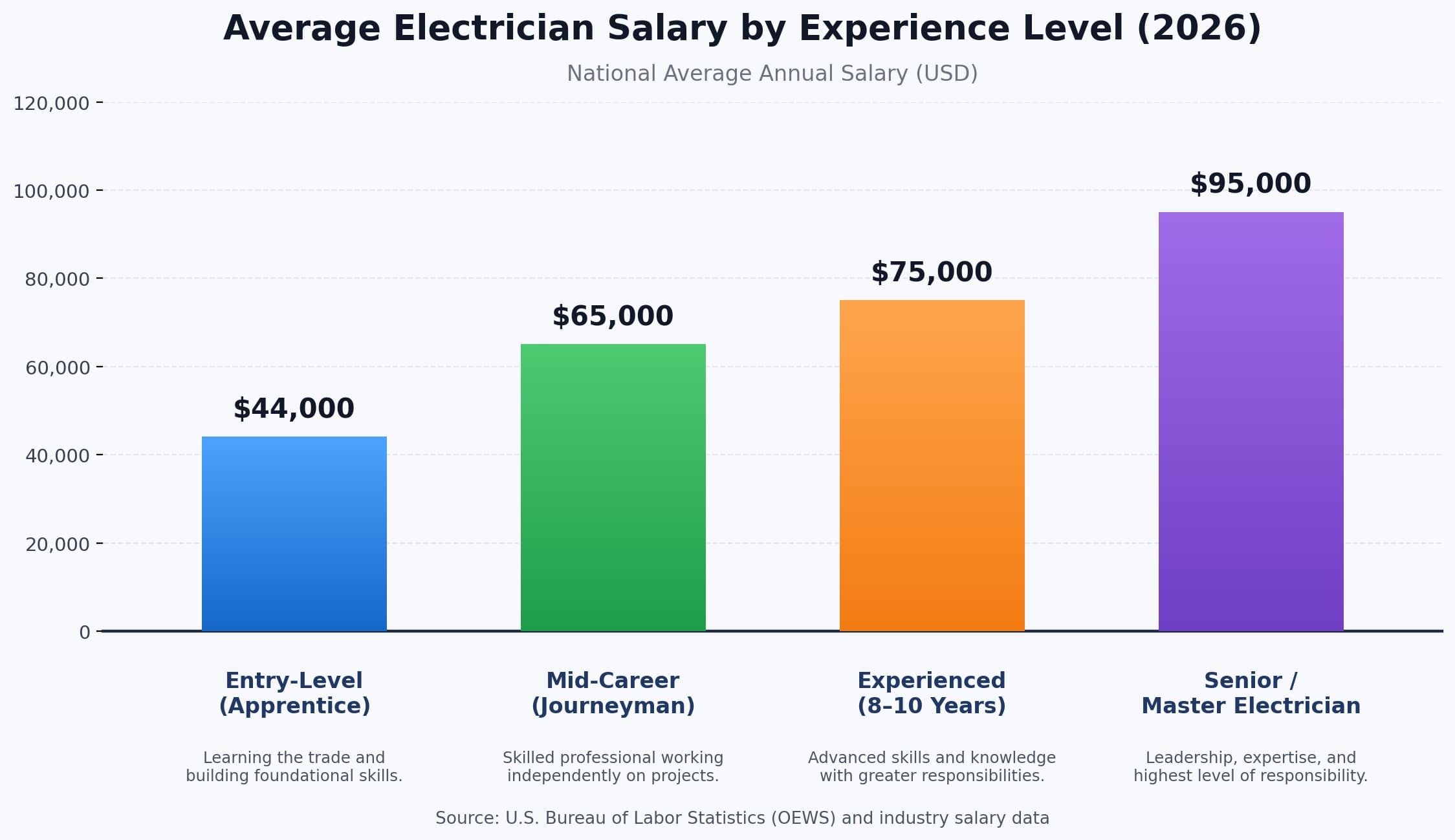
Chart: Average Salary by Experience Level (2026)
| Role | Annual Salary Range |
|---|---|
| Apprentice | $35,000 – $48,000 |
| Journeyman Electrician | $55,000 – $75,000 |
| Experienced Journeyman | $70,000 – $100,000+ |
| Senior / Master Electrician | $80,000 – $106,000+ |
Example: In San Francisco, an experienced journeyman might earn well above the national average due to high cost of living and strong demand for electrical services in the city.
3. State-by-State Salary Comparisons
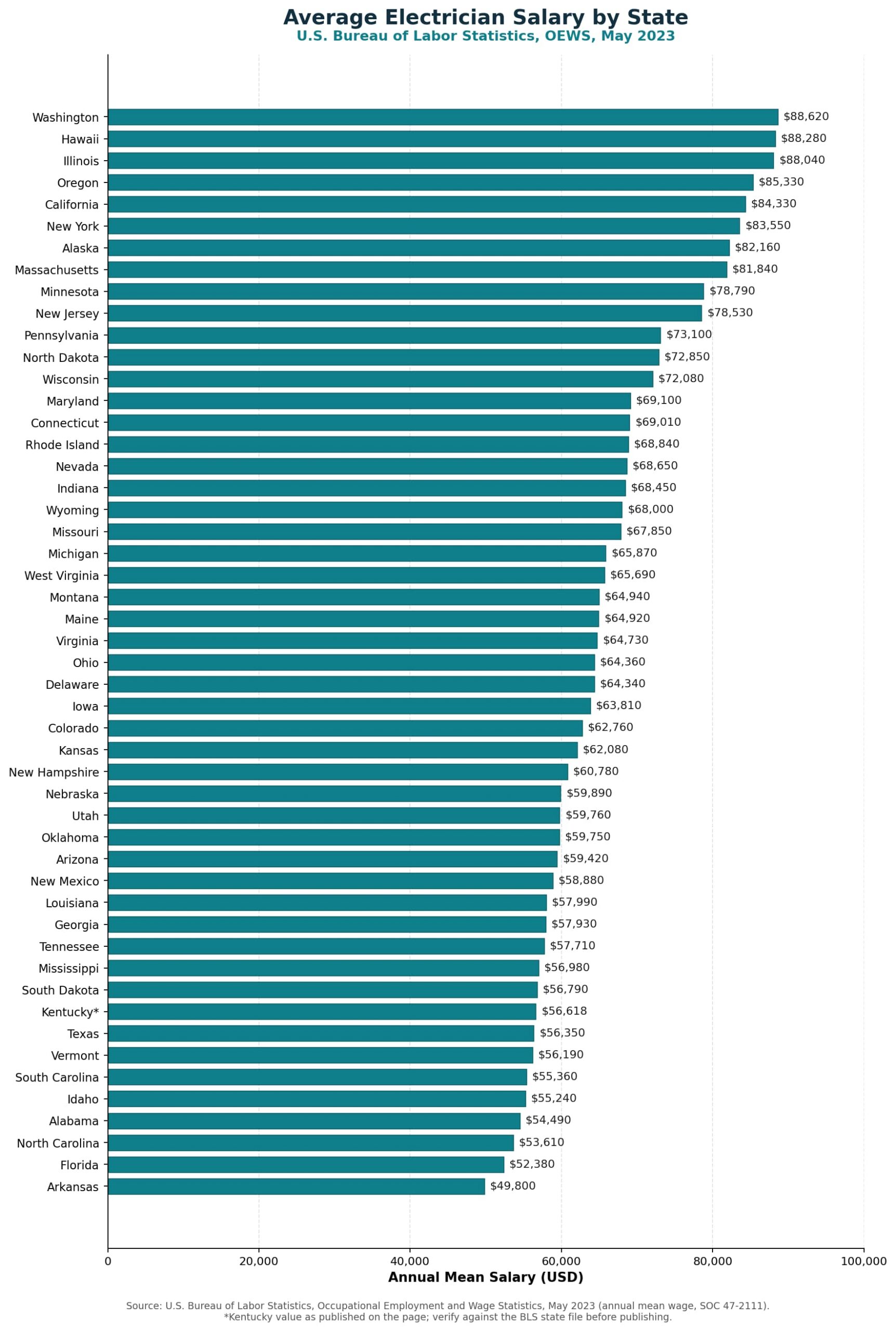
Location plays a huge role in wage levels. States with high demand or a higher cost of living — such as California, Massachusetts, and Illinois — tend to offer higher pay, while states with fewer large urban areas may pay less but have lower expenses.
Chart: Average Electrician Salary by State (2026)
| State | Avg Annual Salary | State | Avg Annual Salary |
|---|---|---|---|
| Alabama | $54,490 | Montana | $64,940 |
| Alaska | $82,160 | Nebraska | $59,890 |
| Arizona | $59,420 | Nevada | $68,650 |
| Arkansas | $49,800 | New Hampshire | $60,780 |
| California | $84,330 | New Jersey | $78,530 |
| Colorado | $62,760 | New Mexico | $58,880 |
| Connecticut | $69,010 | New York | $83,550 |
| Delaware | $64,340 | North Carolina | $53,610 |
| Florida | $52,380 | North Dakota | $72,850 |
| Georgia | $57,930 | Ohio | $64,360 |
| Hawaii | $88,280 | Oklahoma | $59,750 |
| Idaho | $55,240 | Oregon | $85,330 |
| Illinois | $88,040 | Pennsylvania | $73,100 |
| Indiana | $68,450 | Rhode Island | $68,840 |
| Iowa | $63,810 | South Carolina | $55,360 |
| Kansas | $62,080 | South Dakota | $56,790 |
| Kentucky | $56,618 | Tennessee | $57,710 |
| Louisiana | $57,990 | Texas | $56,350 |
| Maine | $64,920 | Utah | $59,760 |
| Maryland | $69,100 | Vermont | $56,190 |
| Massachusetts | $81,840 | Virginia | $64,730 |
| Michigan | $65,870 | Washington | $88,620 |
| Minnesota | $78,790 | West Virginia | $65,690 |
| Mississippi | $56,980 | Wisconsin | $72,080 |
| Missouri | $67,850 | Wyoming | $68,000 |
4. Factors That Influence Electrician Pay
Many factors affect earnings in this industry, including:
- Skills & Qualifications – Specialized technical skills and advanced certifications raise earning potential.
- Licensing Requirements – Each state’s rules differ; some require more training, education, and testing.
- Specialization – Industrial automation, renewable energy, and high-voltage systems often command higher wages.
- Cost of Living – Higher living costs in cities like San Francisco or New York lead to higher pay rates.
- Employer Type – Large contractors, union shops, and government agencies often pay more.
- Overtime Opportunities – Big projects and emergency services can dramatically boost income.
- Trends in the Job Market – New technology, green energy, and economic growth in certain industries raise demand.
5. Benefits & Perks
Beyond base compensation, electricians in many fields enjoy:
- Health, dental, and vision coverage
- Retirement accounts with employer contributions
- Paid leave and sick days
- Access to skill-building courses (sometimes through college partnerships)
- Opportunities for career advancement within their industry
- Access to training databases for ongoing learning
6. Employment Outlook & Trends
The job market for electricians remains strong. The BLS projects 9% growth from 2024 to 2034, roughly three times the average for all occupations. This equals about 81,000 electrician job openings each year.
Growth is fueled by:
- Renewable energy expansion
- Infrastructure upgrades
- Smart home and industrial automation adoption
- Skilled technicians replacing retiring workers
What’s Driving Electrician Pay in 2026
Electrician pay keeps moving in one direction. The national average wage for electricians has climbed roughly 2.5 to 3 percent per year in recent BLS releases, and 2026 has the ingredients for that trend to continue: more work than there are licensed electricians to do it.
Three forces stand out this year. Data center construction is the biggest, with billions in AI and cloud infrastructure projects competing for the same pool of commercial and industrial electricians. EV charging buildout and grid upgrades come next, as utilities and businesses race to add capacity for electrified vehicles, heating, and manufacturing. And on the supply side, a wave of retirements keeps thinning the ranks of experienced journeymen and masters faster than apprenticeship programs can replace them.
For working electricians, that math means leverage: strong overtime, signing bonuses in high-demand markets, and premium rates for industrial, solar, and high-voltage specialties. For shop owners, it means the cost of skilled labor keeps rising, and every unbilled hour gets more expensive.
7. Career Planning Questions
People entering the profession often ask:
- What qualifications and certifications do I need in my state?
- What are the licensing requirements in my state?
- Which areas or cities offer the best salary estimates?
- How can I balance expenses against my income?
Keeping your credentials updated in the state licensing database ensures you’re competitive in every job posting.
8. The Bottom Line
Wherever you work, the pattern is the same: electrician pay climbs steeply with experience, licensing, and specialization. For anyone weighing the jump from journeyman wages to running their own shop, the numbers above are the starting point. The rest comes down to how efficiently you can turn licensed hours into billable ones.
If you run an electrical contracting business, labor is your biggest line item, and the salary data above is only half the equation. The other half is how many of each tech’s paid hours actually get billed. That’s where field service software earns its keep: smarter scheduling and dispatching, less windshield time, and faster invoicing. See how Optsy’s electrical contractor software helps shops get more out of every crew hour.